
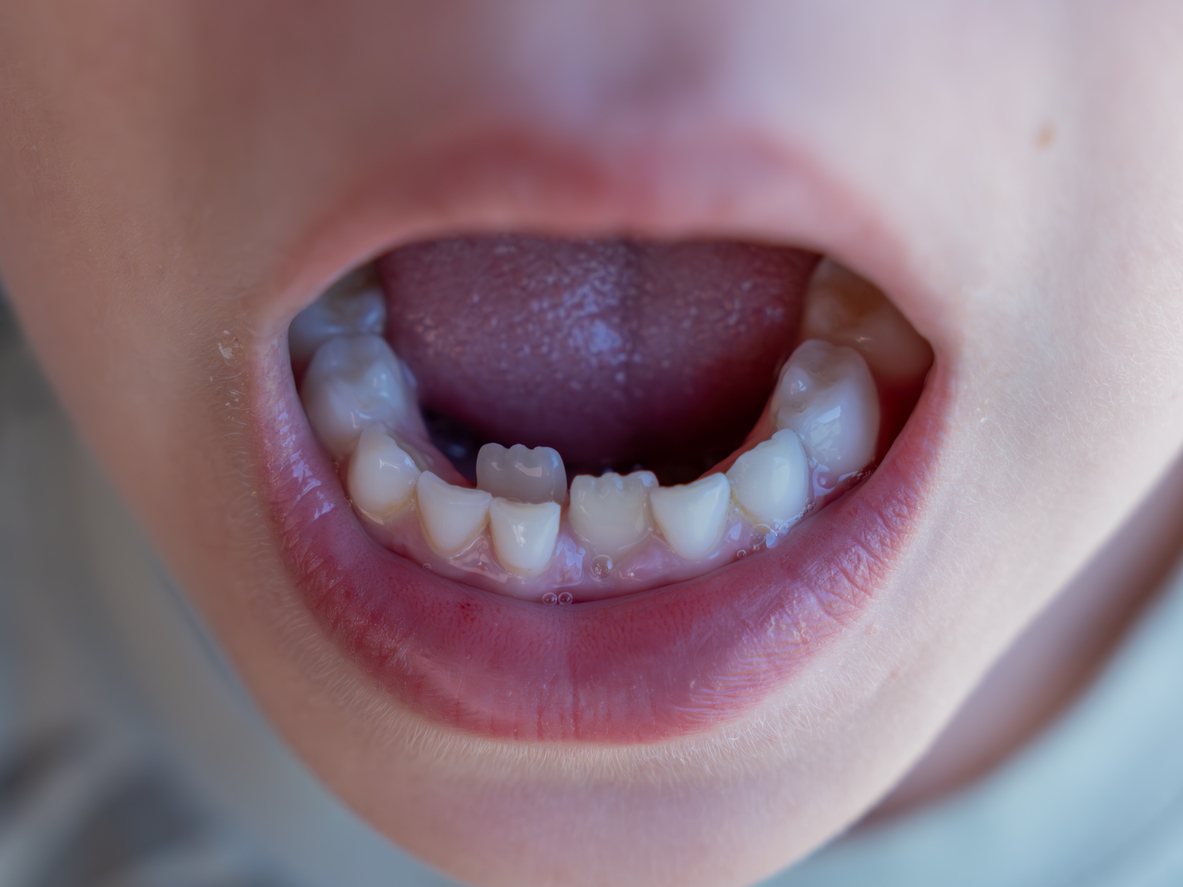
| Quick Answer: Extra teeth — called supernumerary teeth — are additional teeth beyond the normal set, most often appearing in the upper front area (a “mesiodens”). They can block or crowd other teeth, delay eruption, or cause spacing problems. A dentist uses an X-ray to locate them and decides whether to monitor or remove them, often in coordination with an orthodontist. |
Discovering that your child has an extra tooth — or seeing one on an X-ray — can be surprising. At Thunderbird Kids Dentistry in Peoria, our team evaluates these regularly. The good news is that supernumerary teeth are well understood and manageable. Here’s what to know.
What Are Supernumerary Teeth?
Supernumerary teeth are extra teeth beyond the typical 20 baby teeth or 32 permanent teeth. The most common type, a mesiodens, appears between the upper front teeth. They can be present at any stage and are sometimes only found on a routine X-ray because they haven’t erupted.
What Causes Them?
The exact cause isn’t always clear, but genetics play a role, and they’re more common in children with certain conditions, such as cleft lip and palate or some inherited syndromes. In many kids, an extra tooth simply forms on its own with no underlying condition.
Problems Extra Teeth Can Cause
- Blocking or delaying the eruption of nearby permanent teeth
- Crowding or pushing teeth out of alignment
- Creating a gap between the front teeth
- Occasionally forming a cyst around an unerupted extra tooth
Because they can affect the permanent teeth and the bite, extra teeth are worth evaluating even when they aren’t causing obvious trouble yet.
How They’re Diagnosed and Treated
We use an X-ray to locate the extra tooth and see how it relates to the developing permanent teeth. From there, the plan depends on the situation:
- Monitor — if the tooth isn’t causing problems, we may simply watch it over time.
- Remove — if it’s blocking eruption, crowding teeth, or risking a cyst, removal is often recommended.
- Coordinate with orthodontics — if alignment or eruption is affected, we work with an orthodontist on timing and follow-up.
Why Early Evaluation Helps
Catching an extra tooth early — often through routine checkups and X-rays — lets us act before it disrupts the permanent teeth. Our team times any treatment to support your child’s overall development.
Visit Thunderbird Kids Dentistry in Peoria
If your child has — or might have — an extra tooth, our pediatric dental practice in Peoria near Glendale can evaluate it with an X-ray and recommend the right step. We care for children from 9 months through age 18 (special needs to 26) and accept AHCCCS and most plans. Contact our office to schedule.
Frequently Asked Questions
What are supernumerary teeth?
They’re extra teeth beyond the normal set. The most common type, a mesiodens, appears between the upper front teeth. Some are only found on a routine X-ray.
What causes extra teeth in children?
The exact cause isn’t always clear; genetics play a role, and they’re more common with conditions like cleft lip and palate or certain syndromes. Often an extra tooth forms on its own.
Are extra teeth a problem?
They can be. Extra teeth may block or delay permanent teeth, crowd or shift teeth, create a gap, or rarely form a cyst — so they’re worth evaluating even before causing obvious issues.
How are extra teeth treated?
After an X-ray to locate the tooth, your dentist may monitor it, remove it if it’s causing problems, or coordinate with an orthodontist if alignment or eruption is affected.
Does an extra tooth need to be removed?
Not always. If it isn’t causing problems, we may simply monitor it. Removal is recommended when it blocks eruption, crowds teeth, or risks a cyst.
|
Spotted an extra tooth? We truly care about your child’s health and happiness. Reach out to get your child’s appointment scheduled. We can’t wait to see you. Thunderbird Kids Dentistry │ 6780 W Thunderbird Rd, Ste A-105, Peoria, AZ 85381 │ (602) 345-7959 │ Contact Us → |